Spine Care
[Scoliosis Basics & Fundamentals 07] Common Myths and Misconceptions About Scoliosis: What Patients and Parents Should Know
Facts About Causes, Posture, Exercise, Treatment, and Progression. Learn the truth about common scoliosis myths. Discover whether poor posture, backpacks, sports, etc
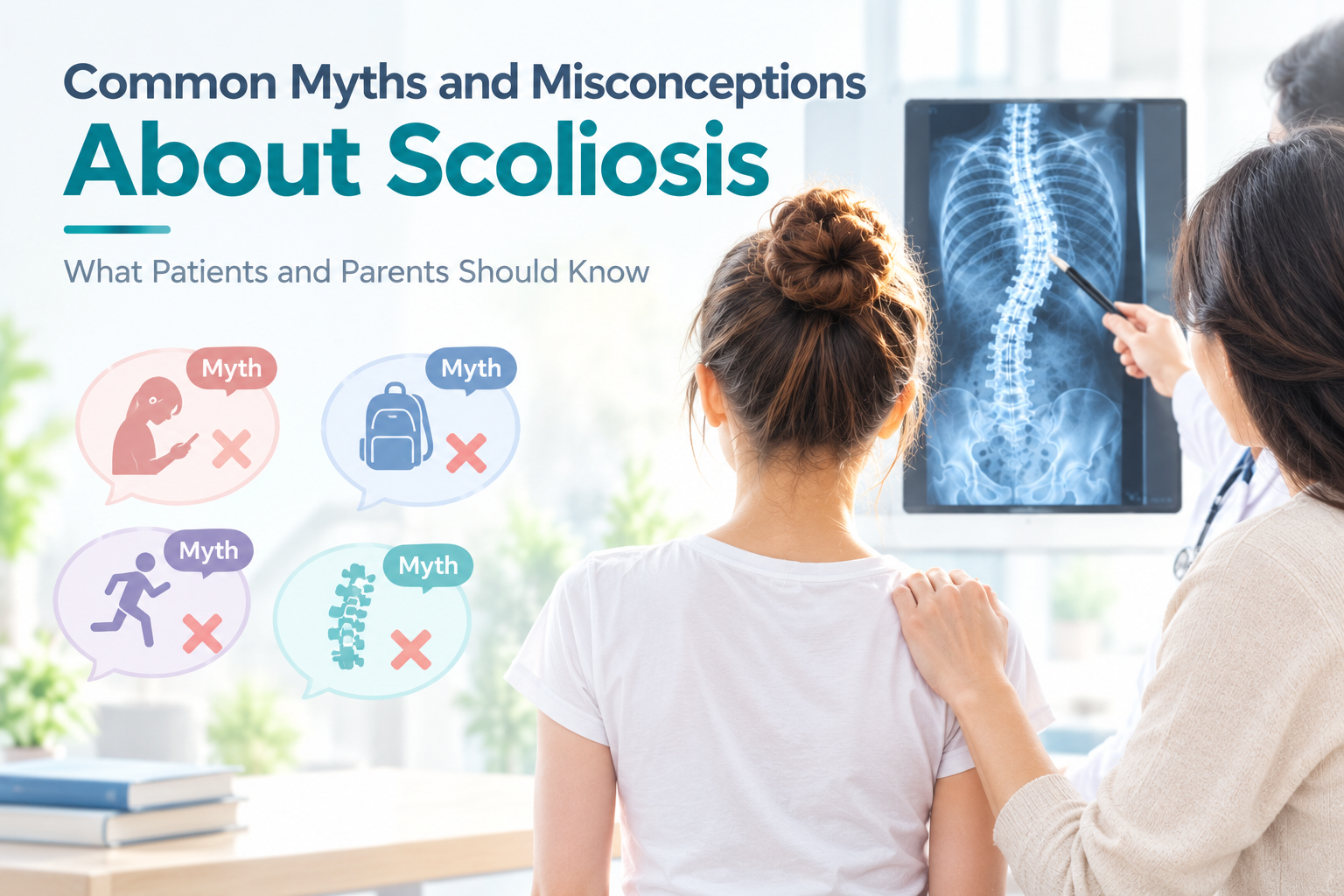
Introduction: Understanding Scoliosis Beyond the Myths
Being told that you or your child has scoliosis can create many questions and worries. Parents often wonder whether they did something wrong, whether their child's posture caused the curve, whether sports should be stopped, or whether scoliosis will inevitably become worse. Patients may also encounter conflicting information online about exercises, braces, surgery, diet, and alternative treatments. [1][2]
The good news is that many of the most frightening ideas about scoliosis are simply not supported by current medical evidence. Scoliosis is a complex spinal condition, and understanding what it is—and what it is not—can help patients and families make better decisions. [1][3]
Scoliosis is generally defined as a lateral spinal curvature of more than 10 degrees when measured using the Cobb angle on an appropriate radiograph. The condition can also involve vertebral rotation and changes in overall spinal alignment, meaning that scoliosis is better understood as a three-dimensional spinal deformity rather than simply a spine that "leans to one side." [1][4]
For families, one principle is particularly important: a diagnosis of scoliosis does not mean that the patient caused the condition, will necessarily experience severe symptoms, or will automatically need surgery. The clinical course varies considerably according to age, curve magnitude, curve pattern, skeletal maturity, underlying cause, and other individual factors. [1][5]
This article examines some of the most common myths about scoliosis and explains what patients and parents should know.
---
Myth 1: "Poor Posture Causes Scoliosis"
Fact: Poor posture does not cause structural scoliosis.
This is probably one of the most common misconceptions about scoliosis.
Parents sometimes notice that their child sits with rounded shoulders, leans to one side while studying, or spends many hours looking down at a phone. It is understandable to wonder whether these habits caused the spinal curve. However, ordinary poor posture is not considered a cause of idiopathic scoliosis. [1][2]
The Scoliosis Research Society specifically states that scoliosis does not result from poor sleeping or standing posture. Similarly, the condition cannot simply be "caused" by learning to sit or stand incorrectly. [1]
This does not mean posture is irrelevant to spinal health. Posture affects how the body is positioned and how muscles work, and poor postural habits can contribute to discomfort or functional asymmetry. However, postural asymmetry and structural scoliosis are not the same thing. [1][6]
A structural scoliosis curve involves anatomical changes within the spine, including lateral curvature and often vertebral rotation. A person cannot simply correct a structural scoliosis curve by being told to "stand straight." [4][7]
What parents should remember
If your child has scoliosis, try not to repeatedly tell them:
- "Sit up straight or your spine will get worse."
- "You caused this by using your phone."
- "You should have had better posture."
- "If you exercise your back muscles, the curve will disappear."
These statements can create unnecessary guilt without addressing the actual biology of scoliosis. [1][2]
---
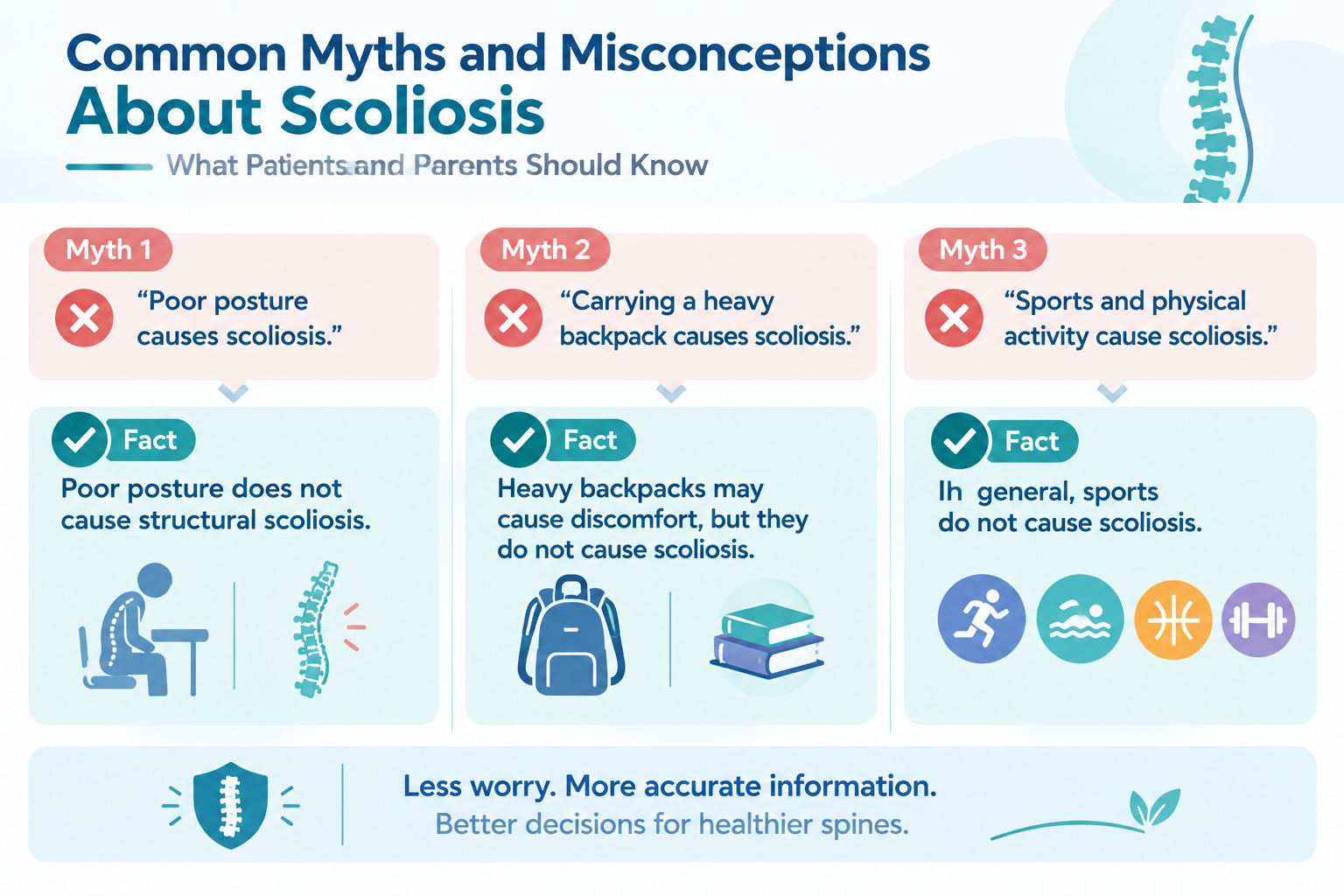
Myth 2: "Carrying a Heavy Backpack Causes Scoliosis"
Fact: Heavy backpacks may contribute to discomfort, but they do not cause scoliosis.
Backpacks are a frequent concern among parents, particularly when children carry books, computers, sports equipment, and other materials to school. A heavy backpack can certainly place additional physical demands on the body and may contribute to back or shoulder discomfort. However, current patient guidance from the Scoliosis Research Society states that carrying a heavy backpack does not cause scoliosis or worsen an existing scoliosis curve. [1][8]
This distinction is important.
A backpack that is too heavy may affect how a child temporarily carries the body. The child may lean forward, shift the trunk, or alter shoulder position while carrying the load. These temporary postural adaptations should not be confused with a structural spinal deformity. [1][8]
A practical approach for parents
Even though backpacks do not cause scoliosis, children should still use them sensibly:
- Avoid unnecessarily heavy loads.
- Use both shoulder straps.
- Adjust the backpack so it fits appropriately.
- Reduce items that do not need to be carried.
- Pay attention to persistent pain or discomfort.
These measures are useful for general musculoskeletal comfort even though they do not prevent idiopathic scoliosis. [8]
---
Myth 3: "Sports and Physical Activity Cause Scoliosis"
Fact: In general, sports do not cause scoliosis.
Another common misconception is that scoliosis develops because a child participates heavily in sports, particularly activities involving repetitive movement, asymmetrical positions, jumping, running, or strength training.
Current guidance does not support the idea that ordinary athletic participation causes idiopathic scoliosis. The Scoliosis Research Society states that athletic involvement does not cause scoliosis. [1][8]
In fact, physical activity is generally encouraged for children and adolescents with scoliosis unless they have pain or their healthcare professional has given specific restrictions. Maintaining physical fitness and trunk strength can be beneficial for overall health and function. [8]
Does this mean every sport is appropriate for every patient?
Not necessarily.
A child with scoliosis may have additional medical conditions, pain, significant spinal deformity, recent surgery, or other circumstances that require individualized recommendations. The appropriate activity level should therefore be determined according to the individual's clinical situation. [8][9]
The key point is that parents should not automatically remove a child from sports simply because the child has scoliosis.
For many children, continuing enjoyable physical activity can support physical health, confidence, social participation, and quality of life. [8]
---
Myth 4: "If My Child Has Scoliosis, I Must Have Caused It"
Fact: Parents generally do not cause idiopathic scoliosis.
Parents often experience guilt after a child receives a scoliosis diagnosis. They may wonder whether something they did during pregnancy, infancy, childhood, nutrition, exercise, or parenting contributed to the spinal curve.
For the majority of children with idiopathic scoliosis, there is no single identifiable cause. More than 80% of scoliosis cases are classified as idiopathic according to the Scoliosis Research Society. [1][2]
The word idiopathic means that the specific cause has not been established.
Researchers continue to investigate genetic, developmental, hormonal, cellular, and other biological factors that may contribute to idiopathic scoliosis. A family history can increase the likelihood of developing scoliosis, but this does not mean that scoliosis follows a simple single-gene inheritance pattern in most patients. [2][10]
Therefore, parents should understand an important message:
A child's idiopathic scoliosis is not evidence that the parent failed to provide proper posture, nutrition, exercise, or care. [1][2]
---
Myth 5: "Scoliosis Is Always Genetic, So It Will Definitely Be Passed to My Children"
Fact: Genetics appear to play a role, but scoliosis is not usually inherited in a simple predictable way.
Family history is relevant to scoliosis. Children who have a parent or sibling with scoliosis may have a higher likelihood of developing the condition. This suggests that genetic factors contribute to susceptibility. [2][10]
However, having a family member with scoliosis does not mean that a child will definitely develop a clinically significant spinal curve.
Idiopathic scoliosis is considered a complex condition involving multiple potential genetic and biological factors. Researchers have identified genetic associations, but these do not allow clinicians to predict with certainty which individual child will develop progressive scoliosis. [10][11]
What does this mean for parents?
If scoliosis runs in your family, it is reasonable to be attentive to changes in your child's spinal symmetry, especially during periods of rapid growth. It does not, however, mean that parents should constantly monitor the child's posture or assume that every minor asymmetry represents scoliosis. [2][5]
When a persistent asymmetry is noticed, professional evaluation is more useful than trying to diagnose the condition at home.
---
Myth 6: "Scoliosis Always Causes Back Pain"
Fact: Many children and adolescents with scoliosis have little or no pain.
This misconception can create confusion because people often associate any abnormality of the spine with pain.
Many children and adolescents with mild idiopathic scoliosis do not experience significant pain or neurological symptoms. Scoliosis may instead be discovered because a parent, teacher, pediatrician, or the child notices changes in shoulder, waist, hip, or trunk symmetry. [2][5]
The Scoliosis Research Society also notes that back pain is common among adolescents for many different reasons and that scoliosis is not necessarily the cause of that pain. [5]
But should pain ever be taken seriously?
Absolutely.
Persistent, severe, unusual, or rapidly worsening pain deserves medical evaluation. Pain accompanied by neurological symptoms such as weakness, numbness, changes in walking, or bowel or bladder problems requires particular attention. [5][12]
In other words:
No pain does not mean scoliosis is absent, and scoliosis does not automatically explain every episode of back pain.
---
Myth 7: "If the Spine Looks Uneven, It Must Be Scoliosis"
Fact: Visible asymmetry does not automatically mean structural scoliosis.
Parents may notice that one shoulder is higher, one hip appears more prominent, or one side of the waist looks different. These findings can occur with scoliosis, but they are not sufficient by themselves to establish a diagnosis. [2][5]
A clinical examination may include observation of posture symmetry, shoulder and pelvic alignment, trunk shift, and the Adam's forward bend test. If scoliosis is suspected, standing spinal radiographs may be used to evaluate the vertebral alignment and measure the Cobb angle. [5][13]
Other factors can contribute to apparent asymmetry, including functional postural differences, pelvic positioning, muscle imbalance, or other musculoskeletal conditions.
Therefore, parents should avoid diagnosing scoliosis solely from photographs or from looking at the child's back in a mirror.
A useful rule
Visual asymmetry → professional assessment → appropriate imaging when indicated → diagnosis.
This approach is more reliable than assuming that every uneven shoulder or hip represents a structural spinal curve. [5][13]
---
Myth 8: "A Small Cobb Angle Means the Spine Is Perfectly Straight"
Fact: The Cobb angle is important, but it is only one part of scoliosis assessment.
The Cobb angle is the standard radiographic measurement used to quantify the magnitude of a scoliosis curve. A measurement of approximately 10 degrees or more is commonly used to define scoliosis. [1][4]
However, the Cobb angle does not describe every aspect of spinal deformity.
Two patients with the same Cobb angle may have different:
- Curve patterns
- Vertebral rotation
- Thoracic or lumbar involvement
- Sagittal alignment
- Trunk balance
- Skeletal maturity
- Symptoms
- Risk of progression
For this reason, clinicians do not normally make treatment decisions based solely on one number. [4][13]
For parents, this means that hearing "20 degrees" or "30 degrees" does not provide the complete clinical picture. The patient's age, growth potential, curve pattern, and progression over time are also important.
---
Myth 9: "If the Cobb Angle Increases by a Few Degrees, the Spine Has Definitely Progressed"
Fact: Small changes in Cobb angle must be interpreted carefully.
Parents may become extremely anxious when one X-ray shows a Cobb angle of 24 degrees and a later X-ray shows 27 degrees.
However, Cobb angle measurement has inherent variability. Differences of only a few degrees may reflect measurement variability rather than true structural progression. Clinicians therefore interpret serial measurements in the context of the overall clinical picture, imaging technique, skeletal maturity, and changes over time. [14][15]
This is one reason why scoliosis monitoring should ideally use appropriately positioned radiographs and consistent measurement methods.
The important question is usually not:
"Did the number change by three degrees?"
but rather:
"Is there convincing evidence that the curve is progressively changing over time, and what does that mean for this patient's stage of growth and overall risk?"
That distinction can help families avoid unnecessary anxiety about every small numerical variation. [14][15]
---
Myth 10: "Everyone With Scoliosis Needs a Brace"
Fact: Bracing is recommended only for selected patients.
A scoliosis diagnosis does not automatically mean that a child needs to wear a brace.
Treatment decisions depend on several factors, including the size and pattern of the curve, the patient's age, remaining skeletal growth, and the likelihood of progression. Some patients can be safely observed without bracing. [3][16]
For growing adolescents with curves in an appropriate range, bracing may be recommended to reduce the risk of further progression. The Scoliosis Research Society notes that bracing is commonly considered for selected growing patients with curves around 25 degrees and above, depending on the clinical situation. [16]
The goal of a scoliosis brace is generally curve control during growth, not simply to make the spine look straight while the brace is being worn. [16]
Parents should therefore not interpret a brace prescription as evidence that their child's scoliosis is hopeless or that surgery is inevitable.
---
Myth 11: "Wearing a Brace Will Permanently Straighten the Spine"
Fact: The primary purpose of bracing in adolescent idiopathic scoliosis is generally to reduce the risk of progression during growth.
A brace can apply corrective forces to the trunk and spine while the child is growing. However, brace treatment should not be understood as permanently reshaping every spinal curve into a perfectly straight spine. [16]
The major treatment objective is usually to limit curve progression and reduce the likelihood that the curve will reach a severity at which surgery may become necessary. [16][17]
Brace effectiveness also depends on factors such as the patient's curve characteristics, skeletal maturity, brace design, and adherence to the prescribed wearing schedule. Evidence from the Bracing in Adolescent Idiopathic Scoliosis Trial demonstrated that bracing can reduce the risk of progression to a surgical threshold in appropriate patients. [17]
Therefore, parents should ask the treating clinician:
- What is the goal of the brace?
- How many hours per day should it be worn?
- How will its effectiveness be monitored?
- How long is treatment expected to continue?
- What changes would indicate that treatment needs adjustment?
Understanding the purpose of bracing can make the experience less frightening for both parents and children. [16][17]
---
Myth 12: "If My Child Has Scoliosis, Surgery Is Inevitable"
Fact: Most patients with scoliosis do not automatically require surgery.
The word "scoliosis" can sound frightening because many people associate it immediately with spinal fusion surgery.
In reality, treatment varies widely. Some patients require only observation, while others may be candidates for bracing or specialized rehabilitation. Surgery is generally reserved for selected patients with severe or progressive curves and specific clinical circumstances. [3][16][18]
For adolescent idiopathic scoliosis, the Scoliosis Research Society generally discusses surgery for curves around 45–50 degrees or greater, or for curves at high risk of continued progression, although actual decisions are individualized. [18]
The decision is not based solely on the Cobb angle. Curve progression, skeletal maturity, symptoms, balance, curve pattern, and the patient's and family's circumstances may all be considered. [18]
For parents
A diagnosis should therefore be viewed as the beginning of an evaluation process—not as a prediction that surgery will happen.
---
Myth 13: "Exercise Can Make Scoliosis Worse"
Fact: Appropriate physical activity is generally encouraged.
Many patients stop exercising after receiving a scoliosis diagnosis because they fear that movement will make the curve worse.
For most children and adolescents with scoliosis, this is unnecessary. The Scoliosis Research Society states that physical activity is generally beneficial and that children can continue participating in activities and sports unless they have pain or have been given specific medical restrictions. [8]
Exercise can also support:
- General cardiovascular fitness
- Muscle strength
- Physical confidence
- Flexibility
- Functional capacity
- Psychological well-being
However, exercise should not be confused with a universal "cure" for structural scoliosis.
Some specialized scoliosis exercise approaches have been developed to address posture, muscle control, breathing mechanics, and three-dimensional spinal alignment. Evidence for specific exercise approaches varies, and the appropriate program should be individualized rather than copied from an online video. [8][19]
---
Myth 14: "Exercise Alone Can Straighten Every Scoliosis Curve"
Fact: No single exercise program can be guaranteed to permanently straighten every structural scoliosis curve.
Exercise can be an important component of scoliosis care, but scoliosis is a heterogeneous condition. Curve magnitude, location, flexibility, vertebral rotation, skeletal maturity, and underlying cause vary substantially between patients. [4][19]
Some scoliosis-specific exercise programs aim to improve postural control, trunk symmetry, muscle balance, breathing patterns, and quality of life. However, patients should be cautious of websites or advertisements claiming that a particular exercise will "cure" every scoliosis curve or eliminate the need for all medical treatment. [19][20]
A responsible approach is to regard exercise as one potential component of a broader management strategy.
For a child who is growing, exercise recommendations may need to be coordinated with observation, bracing, or other treatment when clinically indicated. [16][19]
---
Myth 15: "If a Child Has Scoliosis, They Should Avoid Bending, Running, or Lifting"
Fact: Blanket movement restrictions are generally unnecessary.
The spine is designed to move. Children and adolescents with scoliosis should not automatically be treated as though they have fragile backs that could be damaged by normal movement. [8]
In many cases, children with scoliosis can participate in ordinary daily activities and recreational exercise. Specific restrictions may be appropriate after surgery, in the presence of significant pain, neurological symptoms, severe deformity, or another underlying medical condition. [8][18]
Instead of asking whether a child should "never bend" or "never lift," families should ask:
- Is the activity painful?
- Is there a specific medical restriction?
- Is the child recovering from surgery?
- Does the underlying condition require special precautions?
- Can the activity be performed safely with appropriate technique?
This approach preserves normal physical activity while respecting individual medical needs. [8]
---
Myth 16: "Scoliosis Means the Child Will Be Disabled"
Fact: Most children and adolescents with scoliosis can lead active lives.
A scoliosis diagnosis does not define a person's physical ability, education, career, relationships, or future.
The National Institute of Arthritis and Musculoskeletal and Skin Diseases notes that most children and teens with scoliosis can have normal, active lives with appropriate observation, treatment, and follow-up. [2][3]
The clinical impact of scoliosis varies considerably. Mild curves may produce little functional limitation, while severe or complex curves can cause more significant physical problems. Neuromuscular, congenital, syndromic, and degenerative forms may also behave differently from adolescent idiopathic scoliosis. [2][21]
Therefore, patients should be evaluated as individuals rather than being defined by the word "scoliosis."
For parents, encouraging normal participation in school, friendships, exercise, hobbies, and age-appropriate activities can be an important part of supporting a child's overall well-being. [3][8]
---
Myth 17: "Scoliosis Is Always Obvious"
Fact: Scoliosis can be present without obvious symptoms or dramatic visual changes.
Some children with scoliosis have very noticeable asymmetry. Others have curves that are difficult for a parent to see.
Many children and adolescents with scoliosis have no significant pain, and a mild or moderate curve may initially be identified during a routine physical examination or because someone notices a subtle change in posture symmetry. [2][5]
Possible visible signs include:
- Uneven shoulder height
- One shoulder blade appearing more prominent
- Uneven waist contours
- A trunk shift
- Uneven hips
- Rib prominence during forward bending
However, none of these signs alone establishes the diagnosis. [5]
This is why professional assessment matters, particularly during periods of rapid growth.
---
Myth 18: "If the Child Has No Pain, There Is Nothing to Worry About"
Fact: Scoliosis can be painless.
This is the opposite misconception from the belief that scoliosis always causes pain.
Many adolescents with idiopathic scoliosis have little or no pain. The first sign may be a change in posture symmetry rather than discomfort. [2][5]
Therefore, parents should not use pain as the only indicator of whether scoliosis deserves evaluation.
At the same time, the absence of pain does not mean that every spinal curve requires aggressive treatment. Many curves can simply be monitored, depending on their characteristics and the child's growth status. [3][16]
The appropriate response is assessment and monitoring—not panic.
---
Myth 19: "Alternative Treatment Can Permanently Cure Scoliosis"
Fact: Be cautious about claims of a universal scoliosis cure.
Patients searching for information online may encounter advertisements promising that a particular device, manipulation, supplement, posture method, exercise, or treatment can permanently "cure" scoliosis.
Families should be particularly cautious when a treatment claims to:
- Permanently straighten every scoliosis curve
- Work regardless of curve size or type
- Replace medical evaluation
- Eliminate the need for all bracing or surgery
- Guarantee a specific Cobb-angle reduction
- Produce results without considering skeletal maturity
- Work equally well for every patient
Scoliosis is not one single disease with one uniform biological mechanism. Idiopathic, congenital, neuromuscular, syndromic, and degenerative scoliosis can behave very differently. [1][2][21]
Some non-surgical interventions may have a legitimate role in symptom management, physical function, posture, or curve control in selected patients. The key is to distinguish supportive or management-oriented care from claims of universal cure. [16][19]
A patient should discuss any proposed treatment with a qualified clinician, particularly before delaying or replacing established evaluation or treatment.
---
Myth 20: "The Best Treatment Is Determined by the Cobb Angle Alone"
Fact: Treatment decisions require a broader clinical assessment.
The Cobb angle is essential, but it is not the whole story.
Clinicians may also consider:
- Patient age
- Skeletal maturity
- Growth remaining
- Curve location
- Curve pattern
- Vertebral rotation
- Sagittal alignment
- Trunk balance
- Symptoms
- Neurological findings
- Underlying cause
- Previous treatment
- Evidence of progression
For children and adolescents, the amount of remaining growth is particularly important because curves may progress during periods of rapid skeletal development. [3][16]
Therefore, a treatment decision should not be made from an isolated X-ray number or from a comparison with another patient's curve.
Two people with the same Cobb angle are not necessarily in the same clinical situation.
---
What Should Parents Do After a Scoliosis Diagnosis?
A diagnosis can feel overwhelming, but there are several practical steps parents can take.
1. Ask What Type of Scoliosis It Is
Find out whether the clinician believes the curve is:
- Idiopathic
- Congenital
- Neuromuscular
- Syndromic
- Degenerative
- Functional or associated with another condition
The underlying category can influence evaluation, prognosis, and treatment. [1][2]
2. Ask for the Cobb Angle
The Cobb angle provides an objective description of the radiographic curve magnitude.
However, also ask about:
- Curve location
- Curve pattern
- Skeletal maturity
- Growth remaining
- Whether the curve has changed over time
- Overall spinal balance
These factors provide context for the number. [4][13]
3. Ask Whether the Curve Is Expected to Progress
Progression risk is not identical for every patient.
Age, remaining growth, curve magnitude, curve pattern, and other characteristics can influence the likelihood of progression. [3][16]
4. Keep Your Child Active Unless Medical Advice Says Otherwise
In general, scoliosis should not automatically end participation in sports or normal physical activities. Encourage healthy movement while respecting any individualized medical restrictions. [8]
5. Avoid Blame
If your child has idiopathic scoliosis, there is usually no specific action you can identify as the cause.
Your role as a parent is not to find someone to blame. Your role is to help your child receive accurate evaluation, appropriate monitoring, and evidence-informed care. [1][2]
---
When Should You Seek Medical Evaluation?
A professional evaluation is appropriate if you notice persistent:
- Uneven shoulders
- Prominent shoulder blades
- Uneven waistline
- Pelvic asymmetry
- Trunk leaning
- Rib prominence
- A visible spinal curve
- Progressive changes during growth
Evaluation is especially important when asymmetry appears to be increasing or when a child is undergoing a rapid growth spurt. [2][5]
More urgent medical assessment may be appropriate when spinal asymmetry is accompanied by significant or persistent pain, weakness, numbness, changes in walking, bowel or bladder dysfunction, breathing difficulties, or other concerning neurological or systemic symptoms. [5][12]
---
Important Precautions and Medical Disclaimer
The information provided by 4scoliosis.com is intended for general educational purposes and should not be considered a substitute for professional medical advice, diagnosis, or individualized treatment. Scoliosis varies substantially between individuals, and information that applies to one patient may not apply to another. [2][3]
Do not diagnose scoliosis solely from photographs, posture, shoulder height, or information found online. A healthcare professional may perform a physical examination and determine whether radiographic evaluation is appropriate. [5][13]
Do not start, stop, or modify bracing, exercise, medication, physical therapy, or other treatment solely on the basis of this article. Treatment decisions should be made with an appropriately qualified healthcare professional who understands the patient's age, skeletal maturity, curve characteristics, medical history, and overall health. [3][16]
If a child or adult with suspected scoliosis develops severe or persistent pain, neurological symptoms, significant weakness, bowel or bladder changes, difficulty walking, breathing problems, or rapidly progressive deformity, professional medical assessment should not be delayed. [5][12]
---
Conclusion: Facts Can Replace Fear
Scoliosis can be frightening, especially when a parent first hears the diagnosis in relation to a growing child. But many of the fears surrounding scoliosis come from misconceptions rather than from the condition itself.
Poor posture does not cause idiopathic scoliosis. Heavy backpacks do not cause it. Sports do not cause it. Parents do not need to blame themselves. And a scoliosis diagnosis does not automatically mean that a child will need surgery. [1][2][8]
At the same time, scoliosis should not be dismissed. A structural spinal curve can change during growth, and appropriate monitoring is important for patients who are at risk of progression. [3][16]
The most useful approach is to replace assumptions with objective information:
- Confirm whether scoliosis is actually present.
- Understand the type and pattern of the curve.
- Know the Cobb angle, but do not focus on that number alone.
- Consider skeletal maturity and remaining growth.
- Monitor for progression when appropriate.
- Maintain healthy physical activity unless medically restricted.
- Use evidence-informed treatment when treatment is indicated.
- Avoid unnecessary guilt, fear, and unproven promises of a universal cure.
For parents, perhaps the most important message is simple: your child's scoliosis does not define your child.
With appropriate evaluation, monitoring, and individualized care, many children and adolescents with scoliosis can continue to participate in school, sports, family life, and the activities they enjoy. [2][3][8]
At 4scoliosis.com, our goal is to provide patients and families with clear, medically responsible information so that scoliosis can be understood not with fear, but with knowledge.
---
References
[1] Scoliosis Research Society (SRS). Scoliosis – Patient and Family Information. Information on definition, causes, misconceptions, diagnosis, and common clinical findings. Scoliosis Research Society – Scoliosis
[2] National Institute of Arthritis and Musculoskeletal and Skin Diseases (NIAMS). Scoliosis: Symptoms & Causes. Information on idiopathic scoliosis, symptoms, risk factors, and secondary causes. NIAMS – Scoliosis: Symptoms & Causes
[3] National Institute of Arthritis and Musculoskeletal and Skin Diseases (NIAMS). Scoliosis in Children and Teens: Diagnosis, Treatment, and Steps to Take. NIAMS – Diagnosis and Treatment of Scoliosis
[4] Scoliosis Research Society. Scoliosis. Definition of scoliosis and explanation of spinal curvature and vertebral rotation. SRS – Scoliosis
[5] Scoliosis Research Society. Diagnosing Scoliosis. Information on physical examination, symptoms, Adams forward bend test, and back pain. SRS – Diagnosing Scoliosis
[6] Scoliosis Research Society. Adolescent Idiopathic Scoliosis. Information concerning posture, trunk asymmetry, and clinical presentation. SRS – Adolescent Idiopathic Scoliosis
[7] Scoliosis Research Society. Scoliosis – Adult Patient Information. Information concerning structural scoliosis and the limitations of correcting scoliosis simply through posture. SRS – Adult Scoliosis Information
[8] Scoliosis Research Society. Living with Scoliosis. Information about physical activity, sports, backpacks, and daily life with scoliosis. SRS – Living with Scoliosis
[9] American Academy of Orthopaedic Surgeons (AAOS). Scoliosis in Children and Teens. Overview of scoliosis, types, progression, and treatment. AAOS OrthoInfo – Scoliosis in Children and Teens
[10] National Institute of Arthritis and Musculoskeletal and Skin Diseases (NIAMS). Scoliosis: Symptoms & Causes. Information regarding family history and possible genetic contributions. NIAMS – Scoliosis
[11] Cheng JC, Castelein RM, Chu WCW, et al. Adolescent idiopathic scoliosis. Nature Reviews Disease Primers. 2015;1:15030. PubMed – Adolescent Idiopathic Scoliosis
[12] National Institute of Arthritis and Musculoskeletal and Skin Diseases (NIAMS). Back Pain: Symptoms, Types, & Causes. Information regarding neurological warning signs and causes of back pain. NIAMS – Back Pain
[13] National Institute of Arthritis and Musculoskeletal and Skin Diseases (NIAMS). Scoliosis in Children and Teens: Diagnosis, Treatment, and Steps to Take. NIAMS – Diagnosis and Treatment of Scoliosis
[14] Langensiepen S, Semler O, Sobottke R, et al. Measuring procedures to determine the Cobb angle in idiopathic scoliosis: a systematic review. European Spine Journal. 2013;22:2360–2371. PubMed – Cobb Angle Measurement Review
[15] Scoliosis Research Society. Adolescent Idiopathic Scoliosis. Information concerning radiographic monitoring and skeletal maturity. SRS – Adolescent Idiopathic Scoliosis
[16] Scoliosis Research Society. Bracing. Patient information concerning indications, goals, and effectiveness of bracing for adolescent idiopathic scoliosis. SRS – Bracing for Scoliosis
[17] Weinstein SL, Dolan LA, Wright JG, Dobbs MB. Effects of bracing in adolescents with idiopathic scoliosis. New England Journal of Medicine. 2013;369:1512–1521. PubMed – Bracing in Adolescent Idiopathic Scoliosis
[18] Scoliosis Research Society. Surgery. Patient information concerning surgical indications and treatment goals. SRS – Scoliosis Surgery
[19] Scoliosis Research Society. Living with Scoliosis. Information concerning physical activity and conservative management. SRS – Living with Scoliosis
[20] Scoliosis Research Society. Frequently Asked Questions – General Spinal Deformity FAQs. Information addressing common misconceptions about scoliosis causes. SRS – General Spinal Deformity FAQs
[21] Scoliosis Research Society. Early-Onset Scoliosis. Information on congenital, neuromuscular, syndromic, and idiopathic forms of scoliosis. SRS – Early-Onset Scoliosis