Spine Care
[Scoliosis Basics & Fundamentals 08] How Scoliosis Affects Posture, Balance, and Biomechanics
Scoliosis can affect more than the shape of the spine. Learn how spinal curvature, vertebral rotation, posture asymmetry, balance, and altered biomechanics can influence movement and daily function
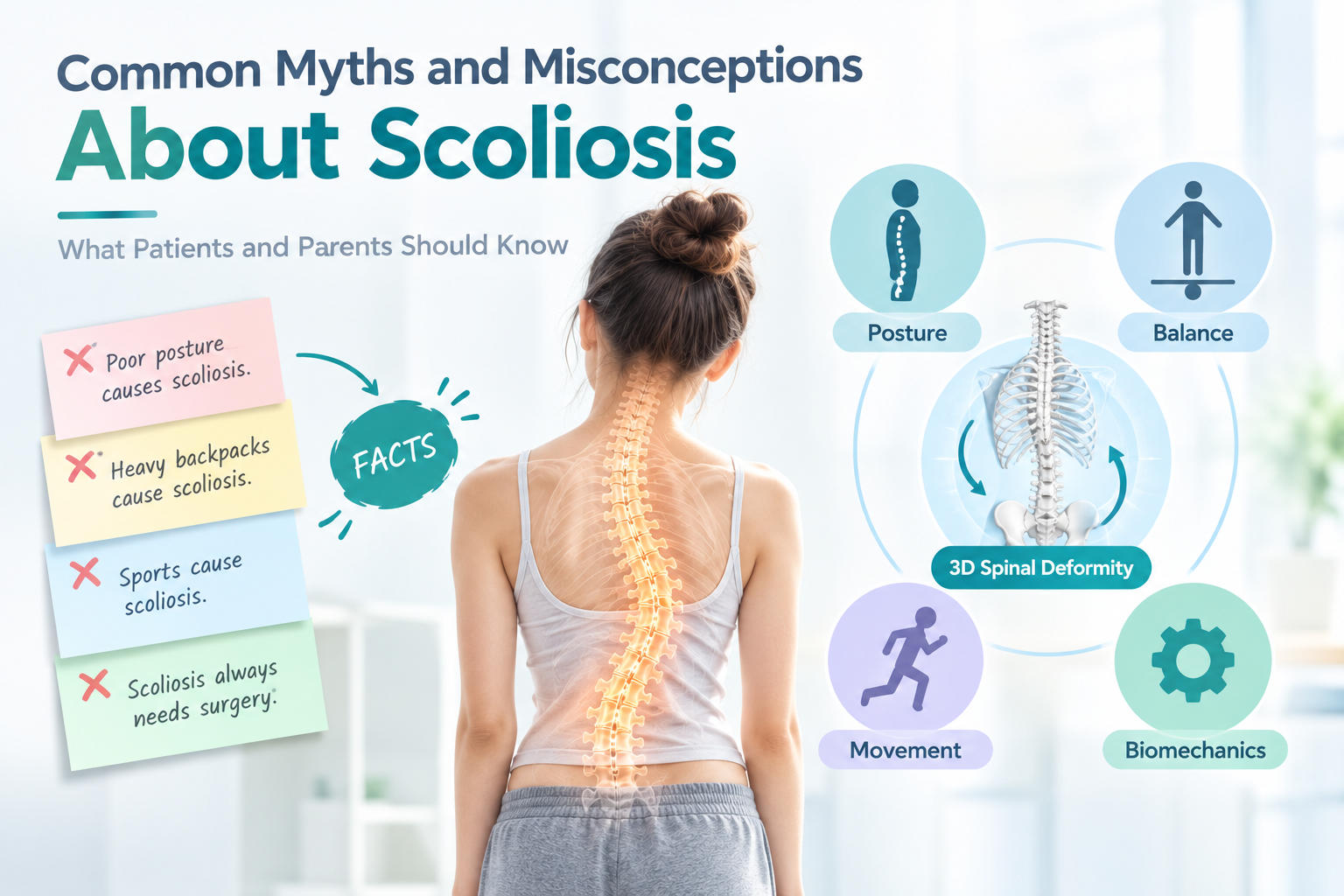
Learn how scoliosis can affect posture, spinal alignment, balance, movement, and biomechanics. Understand Cobb angle, muscle loading, compensatory patterns, and what these changes mean for patients and parents.
Introduction
When a child or teenager is diagnosed with scoliosis, one of the first things parents often notice is a change in posture. One shoulder may appear higher than the other, one shoulder blade may become more prominent, the waist may look uneven, or the trunk may seem to lean to one side. These visible changes can understandably raise an important question: How does scoliosis actually affect the way the body stands, moves, and maintains balance? [1]
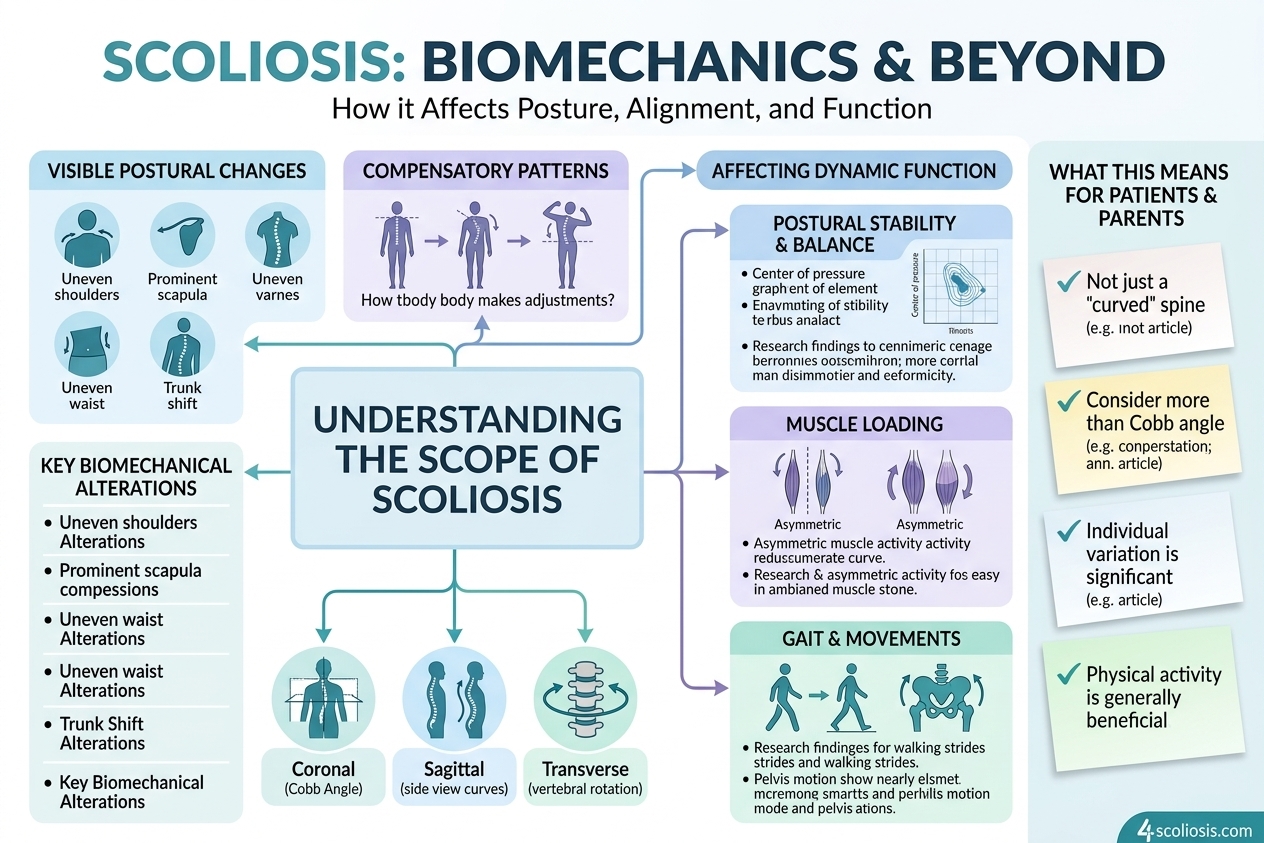
The answer is more complex than simply saying that the spine is "curved." Scoliosis is a three-dimensional spinal deformity involving changes in the coronal plane, sagittal plane, and transverse plane. The resulting changes in spinal alignment can influence the position of the trunk, pelvis, and head and can alter how the body distributes mechanical loads during standing and movement. [1][2]
For patients and parents, this distinction is important. A scoliosis curve does not automatically mean that a person will have poor balance, pain, or significant physical limitations. Many people with scoliosis remain active and function normally. At the same time, research indicates that some individuals—particularly those with adolescent idiopathic scoliosis—can demonstrate measurable differences in postural control, gait, trunk movement, and muscle activation. [3][4]
Understanding these relationships can help families interpret what they see without becoming unnecessarily worried. It can also help patients understand why scoliosis assessment should consider more than the Cobb angle alone.
---
1. What Does Scoliosis Change in the Body?
A normal spine is not perfectly straight in every direction. When viewed from the side, the cervical spine, thoracic spine, and lumbar spine have physiological curves that help position the head and trunk over the pelvis and distribute mechanical forces efficiently. [5]
Scoliosis introduces an abnormal structural curve into this system. On an X-ray, the curve is commonly quantified using the Cobb angle, but the radiographic angle represents only one component of the deformity. Scoliosis can also involve vertebral rotation, changes in sagittal alignment, and displacement of the trunk relative to the pelvis. [1][2]
For example, a thoracic scoliosis curve may be associated with rotation of the vertebrae and rib cage. This can create a visible rib prominence on one side of the back, particularly during the forward-bending examination. Similarly, a lumbar curve may contribute to asymmetry around the waist or pelvis. [1]
The result is not necessarily that the entire body simply "leans." Instead, the body may make a series of compensatory adjustments in an attempt to keep the head and trunk balanced over the pelvis and maintain an efficient upright position. [2][5]
---
2. Scoliosis and Posture: Why Does the Body Look Asymmetrical?
One of the most noticeable effects of scoliosis is postural asymmetry.
During a clinical examination, healthcare professionals may look at the patient from multiple directions and assess the position of the head, neck, shoulders, scapulae, pelvis, hips, and trunk. The Scoliosis Research Society describes observation of shoulder-blade asymmetry, waistline asymmetry, and trunk shift as important components of scoliosis evaluation. [1]
Parents may therefore notice:
- One shoulder higher than the other
- One shoulder blade more prominent
- Uneven waist contours
- One hip appearing higher
- The trunk appearing shifted to one side
- Rib prominence
- A head or neck position that appears off-center
- An asymmetric standing posture
These findings do not necessarily mean that the child is experiencing pain or functional disability. In many adolescents, scoliosis is discovered because of visible asymmetry rather than symptoms. [1]
Why does this happen?
A structural spinal curve changes the geometric relationship between the vertebrae and the surrounding trunk. Vertebral rotation can alter the position of the ribs and muscles, while the overall curve can shift the trunk relative to the pelvis. The body then attempts to maintain a stable and functional position by adjusting other segments of the spine and lower limbs. [2][6]
This is one reason scoliosis should be understood as a whole-body alignment problem, rather than as an isolated bend in one section of the spine.
---
3. The Spine Is a Three-Dimensional Structure
It is useful to imagine the spine as a structure that can move and deform in three primary anatomical planes.
The Coronal Plane
The coronal plane describes side-to-side alignment when the body is viewed from the front or back.
The Cobb angle is primarily used to quantify the magnitude of a scoliosis curve in this plane. [1][7]
A larger Cobb angle generally represents a larger radiographic curve, but the relationship between curve magnitude and functional effects is not perfectly linear. Two patients with similar Cobb angles may have different levels of trunk asymmetry, balance, symptoms, or functional limitations. [2][4]
The Sagittal Plane
The sagittal plane describes the body from the side.
Normal sagittal alignment includes:
- Cervical lordosis
- Thoracic kyphosis
- Lumbar lordosis
These curves work together to maintain the head and trunk over the pelvis. [5]
When spinal deformity changes this relationship, the body may use compensatory movements of the pelvis, hips, and knees to maintain an upright position. The Scoliosis Research Society describes this concept in terms of sagittal balance and compensation. [5][8]
The Transverse Plane
The transverse plane describes rotation.
Vertebral rotation is an important component of scoliosis and helps explain why a patient can have a visible rib prominence even though the primary radiographic measurement is a coronal Cobb angle. [1][2]
Therefore, scoliosis is better understood as a three-dimensional alteration in spinal alignment rather than simply a sideways curve.
---
4. What Is Spinal Balance?
The word balance can be confusing because it does not simply mean "being able to stand without falling."
In spinal biomechanics, balance refers to how the different components of the spine and trunk are positioned relative to one another so that the body can maintain an upright posture. The Scoliosis Research Society describes spinal balance in relation to the positioning of the head and spine over the sacrum and pelvis in both the frontal and sagittal planes. [8]
A person does not maintain perfect stillness while standing. Even a healthy person makes continuous, very small postural adjustments called postural sway.
The nervous system constantly receives information from:
- The eyes
- The vestibular system
- Muscles
- Joints
- The feet
- The skin
The brain integrates this information and adjusts muscle activity to keep the body's center of mass within an appropriate area of support. [4][9]
In scoliosis, changes in spinal geometry may alter this sensory and mechanical system.
---
5. Does Scoliosis Affect Balance?
Research suggests that some adolescents with idiopathic scoliosis demonstrate differences in postural stability and postural control compared with adolescents without scoliosis. [3][4]
A systematic review and meta-analysis found evidence of reduced postural stability in adolescents with idiopathic scoliosis, including differences in center-of-pressure measures during standing. The evidence was described as moderate quality, and the researchers emphasized that further research is needed to understand whether altered postural control contributes to scoliosis development or results from the spinal deformity. [3]
This distinction is extremely important.
Association does not automatically mean causation.
If a teenager with scoliosis demonstrates altered balance, this does not prove that poor balance caused the scoliosis.
Similarly, it does not prove that the spinal curve alone caused the balance difference.
The relationship may be bidirectional or multifactorial, involving spinal geometry, sensory integration, neuromuscular control, growth, and other biological factors. Recent systematic reviews continue to investigate these relationships. [4][10]
---
6. What Is the Center of Pressure?
One technical concept used in balance research is the center of pressure (COP).
When a person stands on a force platform, the platform can measure how forces are distributed under the feet. The location of the center of pressure changes continuously as the person makes small adjustments to maintain balance. [3]
Researchers can analyze parameters such as:
- COP displacement
- Mediolateral movement
- Anteroposterior movement
- Sway area
- Sway velocity
Studies of adolescents with idiopathic scoliosis have reported differences in some of these parameters compared with typically developing adolescents. [3][4]
For patients and parents, however, it is important not to interpret these research measurements as meaning that every person with scoliosis has a clinically significant balance problem.
A child can have scoliosis and still walk, run, play sports, and participate in school activities normally.
---
7. How Scoliosis Can Change Biomechanics
Biomechanics is the study of how mechanical forces act on the human body and how the body responds to those forces.
In scoliosis, biomechanics becomes particularly important because the spine no longer has perfectly symmetrical geometry.
Imagine a flexible column subjected to gravity and external forces. If the column becomes curved and rotated, the distribution of mechanical forces can change.
In the human body, however, the situation is much more sophisticated because the spine is supported by:
- Muscles
- Ligaments
- Intervertebral discs
- Facet joints
- The rib cage
- Pelvis and hips
- Abdominal musculature
- Lower-extremity joints
The nervous system also actively controls these structures during movement.
Consequently, a spinal curve can be associated with changes in muscle activation, trunk motion, pelvic movement, gait, and loading patterns. Recent review-level evidence indicates that adolescents with idiopathic scoliosis can demonstrate differences in these movement-related biomechanical characteristics. [10]
---
8. Muscle Activation and Scoliosis
The muscles surrounding the spine play a major role in maintaining upright posture.
When the spine is asymmetric, the mechanical demands placed on muscles on the two sides of the body may also differ.
This does not mean that one side is simply "weak" and the other is "strong." Muscle behavior can be more complicated, involving differences in:
- Muscle activation timing
- Activation intensity
- Muscle length
- Mechanical leverage
- Fatigue
- Coordination
- Trunk stabilization
Research using electromyography and other biomechanical methods has identified differences in muscle activation patterns in some individuals with adolescent idiopathic scoliosis. [4][10]
For patients, this means that a scoliosis assessment should not focus exclusively on the visible spinal curve.
A clinician may also consider how the patient moves, stabilizes the trunk, and performs functional activities.
---
9. Does Scoliosis Change the Way a Person Walks?
Walking requires coordinated movement of the:
- Spine
- Pelvis
- Hips
- Knees
- Ankles
- Upper limbs
The trunk and pelvis must rotate and move in a coordinated manner while the body maintains its center of mass over the base of support.
Research reviews indicate that adolescent idiopathic scoliosis can be associated with differences in gait, pelvic motion, trunk motion, loading patterns, and spinal mobility. [10]
However, these findings should be interpreted carefully.
A research finding that a group of adolescents with scoliosis demonstrates an average difference in gait does not mean that every patient walks abnormally.
Many people with scoliosis walk normally and participate in demanding physical activities.
The practical question is therefore not simply:
"Does scoliosis change walking?"
A better question is:
"Does this individual's scoliosis affect their movement or function?"
That distinction is much more useful clinically.
---
10. The Relationship Between Posture and Compensation
The human body is remarkably adaptable.
When one part of the body becomes displaced, other parts may change position to maintain overall balance.
For example, a spinal deformity can be accompanied by compensatory changes involving:
- Pelvic tilt
- Lumbar lordosis
- Thoracic kyphosis
- Hip position
- Knee position
- Trunk translation
The Scoliosis Research Society describes compensation as the active process through which the body attempts to maintain balance when spinal alignment is altered. [5][8]
This explains why looking only at the location of the primary curve may provide an incomplete picture.
A patient can have a thoracic curve but demonstrate changes elsewhere in the spine and pelvis because the body is attempting to keep the head and trunk balanced.
---
11. What Happens When Sagittal Balance Is Lost?
Sagittal alignment becomes particularly important in adult spinal deformity.
If the spine becomes excessively forward-leaning, the body may attempt to compensate by changing the position of the pelvis, hips, and knees.
For example, a person with significant sagittal imbalance may bend the hips and knees in an attempt to keep the upper body upright. According to the Scoliosis Research Society, these compensatory strategies can increase the mechanical demands placed on the muscles of the lower back and legs. [8]
This can contribute to fatigue and difficulty maintaining an upright posture.
However, not every person with scoliosis develops sagittal imbalance, and the severity of functional consequences varies considerably between individuals.
---
12. Why Posture Symmetry Matters—But Should Not Be Overinterpreted
Parents naturally notice asymmetry.
Seeing one shoulder higher than the other or a child standing differently can be concerning.
But posture symmetry alone cannot diagnose scoliosis.
Shoulder height can be influenced by many factors, including:
- Spinal curvature
- Pelvic position
- Limb position
- Muscle tension
- Habitual stance
- Previous injury
- Normal anatomical variation
The Scoliosis Research Society recommends a structured physical examination and, when indicated, standing spinal radiographs for diagnosis and characterization of scoliosis. [1][11]
Therefore, parents should avoid repeatedly telling a child to "stand straight" as though the child is simply choosing poor posture.
If a structural curve is present, asking the child to consciously straighten the spine does not eliminate the underlying deformity.
---
13. Can Poor Posture Cause Scoliosis?
This is one of the most common concerns among parents.
Ordinary poor posture is not considered a cause of adolescent idiopathic scoliosis. The Scoliosis Research Society specifically notes that scoliosis is not caused by poor standing or sitting posture, heavy backpacks, or participation in sports. [1][12]
This is an important message for families.
A child should not be blamed for developing scoliosis.
At the same time, posture remains clinically relevant because scoliosis itself can produce postural asymmetry and because healthy movement habits can support general musculoskeletal health.
The distinction is:
Poor posture does not normally cause structural scoliosis, but scoliosis can alter posture.
---
14. Does Scoliosis Mean a Child Should Avoid Sports?
In most cases, scoliosis does not mean that a child must stop being physically active.
The Scoliosis Research Society states that physical activity is generally beneficial for children with scoliosis and that, unless pain or specific medical instructions are present, children should generally continue participating in activities and sports they enjoy. [12]
Physical activity can support:
- General cardiovascular fitness
- Muscle strength
- Coordination
- Bone health
- Confidence
- Social participation
- Overall quality of life
Parents should nevertheless follow individualized medical advice when a child has significant pain, neurological symptoms, a complex underlying condition, or has recently undergone treatment or surgery.
---
15. Does a Larger Cobb Angle Always Mean Worse Balance?
Not necessarily.
The Cobb angle is an important measurement, but it does not provide a complete description of how a person functions.
Two patients may have similar Cobb angles but different:
- Vertebral rotation
- Sagittal alignment
- Pelvic alignment
- Trunk shift
- Muscle coordination
- Balance
- Pain levels
- Physical activity levels
This is why modern scoliosis evaluation increasingly considers both static structure and dynamic function. Recent research has highlighted differences in movement, gait, pelvic motion, postural control, muscle activation, and loading patterns that may not be captured by a standing radiograph alone. [2][10]
---
16. Scoliosis in Children vs. Adults
The biomechanical consequences of scoliosis can differ according to age.
Children and Adolescents
During growth, the spine and musculoskeletal system are changing rapidly. Curve progression is therefore an important consideration in growing children and adolescents. [1][11]
A child's posture may change substantially during a growth spurt.
For this reason, physicians may monitor:
- Cobb angle
- Skeletal maturity
- Curve pattern
- Trunk balance
- Clinical asymmetry
- Symptoms
- Neurological findings
Adults
In adults, scoliosis may coexist with age-related degenerative changes.
These can include:
- Disc degeneration
- Facet joint degeneration
- Spinal stenosis
- Changes in lumbar lordosis
- Sagittal imbalance
As a result, adult scoliosis may affect not only posture but also standing endurance, walking tolerance, and pain. [8][13]
---
17. What Should Parents Look For at Home?
Parents do not need specialized equipment to notice potential changes in posture.
You may observe your child standing naturally and look for persistent asymmetry such as:
- Uneven shoulders
- Uneven shoulder blades
- Uneven waistline
- A trunk shift
- One hip appearing higher
- Rib prominence
- A persistent lateral lean
If these findings are persistent or become more noticeable during growth, discuss them with a qualified healthcare professional. [1][11]
Parents should avoid repeatedly correcting the child's posture or attempting to "straighten" the spine manually without professional guidance.
The purpose of observation is early recognition, not self-diagnosis.
---
18. When Should a Child Be Professionally Evaluated?
Professional evaluation is particularly appropriate when a child or adolescent develops a persistent visible spinal asymmetry or when there are symptoms such as:
- Persistent or significant back pain
- Numbness
- Weakness
- Changes in walking
- Loss of coordination
- Rapidly developing deformity
- Breathing difficulties
- Bowel or bladder changes
- Signs of neurological involvement
The Scoliosis Research Society notes that scoliosis evaluation can include physical examination, the Adam's forward bend test, neurological examination, and standing X-rays when appropriate. [1][11]
Importantly, most adolescents with idiopathic scoliosis do not develop severe neurological problems or major functional limitations.
Nevertheless, unusual symptoms should not simply be attributed to scoliosis without appropriate assessment.
---
19. What Can Patients Do to Support Healthy Movement?
For most patients, the goal should not be to achieve a perfectly symmetrical posture at every moment.
Human posture naturally changes throughout the day.
A healthier objective is to develop comfortable, efficient, and functional movement appropriate to the individual's condition.
Depending on the patient's diagnosis and treatment plan, healthcare professionals may consider:
- Maintaining general physical activity
- Developing appropriate trunk and core strength
- Improving flexibility where clinically appropriate
- Maintaining cardiovascular fitness
- Practicing coordinated movement
- Addressing pain appropriately
- Monitoring changes during growth
- Following prescribed physiotherapy or scoliosis-specific exercise programs
Specific exercises should be individualized when necessary. A program that is appropriate for one curve pattern or patient may not be appropriate for another.
---
20. The Most Important Concept: Structure and Function Are Connected
Perhaps the most useful way to understand scoliosis is to recognize that structure and function influence each other.
The spinal curve changes the mechanical environment in which muscles, joints, and the nervous system operate.
At the same time, the body continually adapts its posture and movement to maintain balance and function.
This creates a dynamic relationship among:
Spinal structure → posture → balance → muscle activation → movement → mechanical loading
Recent research on adolescent idiopathic scoliosis supports the idea that movement-related biomechanics—including gait, trunk and pelvic motion, postural control, muscle activation, loading patterns, and spinal mobility—can differ from those observed in individuals without scoliosis. [4][10]
However, research has not established that every biomechanical difference causes scoliosis, nor that correcting a single biomechanical variable will necessarily prevent curve progression.
That distinction is essential for responsible patient education.
---
Important Precautions and Medical Disclaimer
The information provided by 4scoliosis.com is intended for educational purposes only. It is not a substitute for an individual medical examination, diagnosis, or treatment plan from a qualified healthcare professional.
Scoliosis is a heterogeneous condition. The effects of a spinal curve on posture, balance, movement, and biomechanics vary according to factors such as age, curve pattern, Cobb angle, vertebral rotation, skeletal maturity, underlying cause, sagittal alignment, neurological status, and overall physical condition. [1][2][10]
A visible posture asymmetry does not necessarily mean that a person has scoliosis. Conversely, a person may have radiographically confirmed scoliosis without obvious functional problems.
Patients and parents should not attempt to diagnose scoliosis based solely on photographs, posture, or online information.
Similarly, exercises, braces, manual techniques, traction devices, supplements, or other interventions should not be selected solely because they appear to address "imbalance" or "biomechanics." Treatment decisions should be based on an appropriate clinical assessment and the available evidence for the specific patient and condition.
Seek prompt medical evaluation when spinal asymmetry is accompanied by significant or persistent pain, progressive weakness, numbness, changes in gait or coordination, bowel or bladder dysfunction, breathing problems, or other concerning neurological symptoms.
---
Conclusion: Scoliosis Is More Than a Curved Spine
Scoliosis can affect much more than the appearance of the spine.
Because the spine is the central structural support of the trunk, a three-dimensional spinal deformity can influence posture symmetry, trunk position, balance, muscle activation, movement patterns, and mechanical loading. [2][4][10]
However, this does not mean that every person with scoliosis will experience balance problems or functional limitations.
For parents, one of the most important messages is simple:
Do not blame your child for their posture, and do not assume that scoliosis is caused by poor posture.
Instead, look for persistent changes, obtain an appropriate professional evaluation, and focus on understanding the individual child's spinal structure and functional needs.
The Cobb angle remains an important measurement, but it should be considered alongside spinal alignment, vertebral rotation, skeletal maturity, posture, symptoms, and function. [1][7]
For adults with scoliosis, assessment may also need to consider degenerative changes, sagittal balance, pain, walking tolerance, and the ability to maintain an upright posture. [8][13]
Ultimately, the goal of scoliosis care is not simply to make a person look perfectly symmetrical. The more meaningful goal is to help the patient maintain safe, functional, comfortable, and sustainable movement while making informed decisions about their spinal health.
At 4scoliosis.com, we believe that patients and parents deserve understandable, evidence-informed information about scoliosis. Understanding how spinal structure interacts with posture, balance, and biomechanics is an important step toward becoming an informed participant in scoliosis care.
---
References
[1] Scoliosis Research Society (SRS). Scoliosis. Information on scoliosis definition, clinical examination, postural asymmetry, and diagnosis. Scoliosis Research Society – Scoliosis
[2] Scoliosis Research Society (SRS). Glossary – Spinal Alignment and Balance. Definitions of spinal planes, spinal balance, compensation, and global alignment. SRS Glossary
[3] Zaina F, Donzelli S, Negrini S, et al. Does postural stability differ between adolescents with idiopathic scoliosis and typically developed adolescents? A systematic literature review and meta-analysis. The review found evidence of differences in postural stability and center-of-pressure parameters in adolescents with idiopathic scoliosis.
[4] Neurophysiological, balance and motion evidence in adolescent idiopathic scoliosis: A systematic review. Systematic review examining balance, motion, sensory integration, neuromuscular, and biomechanical evidence in adolescent idiopathic scoliosis.
[5] Scoliosis Research Society. Sagittal Spinal Alignment – A Handbook for Patients and Health Care Providers. Explanation of sagittal alignment, lumbar lordosis, thoracic kyphosis, pelvic relationships, and compensatory mechanisms.
[6] Scoliosis Research Society. Adolescent Idiopathic Scoliosis. Information regarding clinical presentation, posture, spinal examination, and radiographic assessment.
[7] Cobb JR. Outline for the Study of Scoliosis. Instructional Course Lectures. 1948;5:261–275. Foundational description of the Cobb method for quantifying scoliosis curvature.
[8] Scoliosis Research Society. Fixed Sagittal Imbalance. Information regarding sagittal imbalance, compensatory hip and knee positioning, and the mechanical demands of maintaining upright posture.
[9] Scoliosis Research Society. Living with Scoliosis. Patient-focused information concerning physical activity and daily life with scoliosis.
[10] Movement Related Biomechanics in Adolescent Idiopathic Scoliosis: A Review of Reviews. 2026. Recent review-level evidence describing differences in gait, pelvic and trunk motion, balance, postural control, muscle activation, loading patterns, and spinal mobility in adolescent idiopathic scoliosis.
[11] Scoliosis Research Society. Diagnosis and Treatment. Information on clinical evaluation, observation, radiographic monitoring, and treatment considerations.
[12] Scoliosis Research Society. Living with Scoliosis – Physical Activity and Sports. Patient guidance regarding physical activity and participation in sports.
[13] Scoliosis Research Society. Neuromuscular Scoliosis. Information concerning trunk balance, pelvic obliquity, coordination, and functional effects in neuromuscular scoliosis.